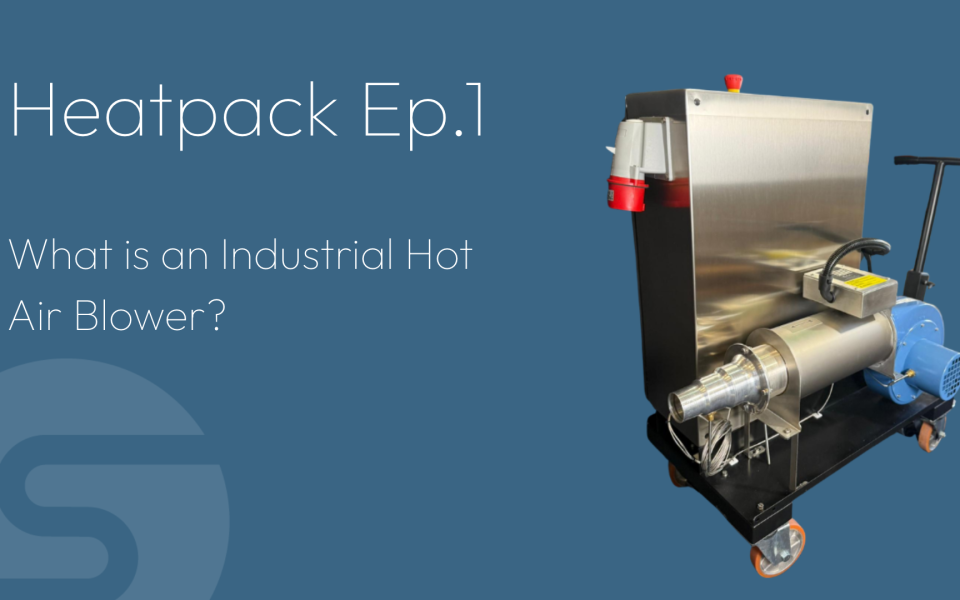
An industrial hot air blower supplies heated air to a manufacturing process. It can be used to dry components, support curing or bring a part up to temperature before the next production stage. In an electric system, a fan or blower moves air through a heater, and the heated air is directed to where it is needed.
Choosing a suitable system starts with the process itself. The required temperature matters, but so do airflow, heat-up time and the way heat reaches the material. Understanding how these factors work together makes it easier to specify equipment that suits the job.
How Does an Industrial Hot Air Blower Work?
An electric process air heater uses electrical resistance elements to heat a moving stream of air. A fan or blower provides the airflow, while ducting, hoses or nozzles carry the heated air into the process.
A temperature sensor and controller can regulate heater output against a set temperature. The location of the sensor matters: a measurement at the heater outlet tells you something different from a measurement inside an oven or at the component being heated.
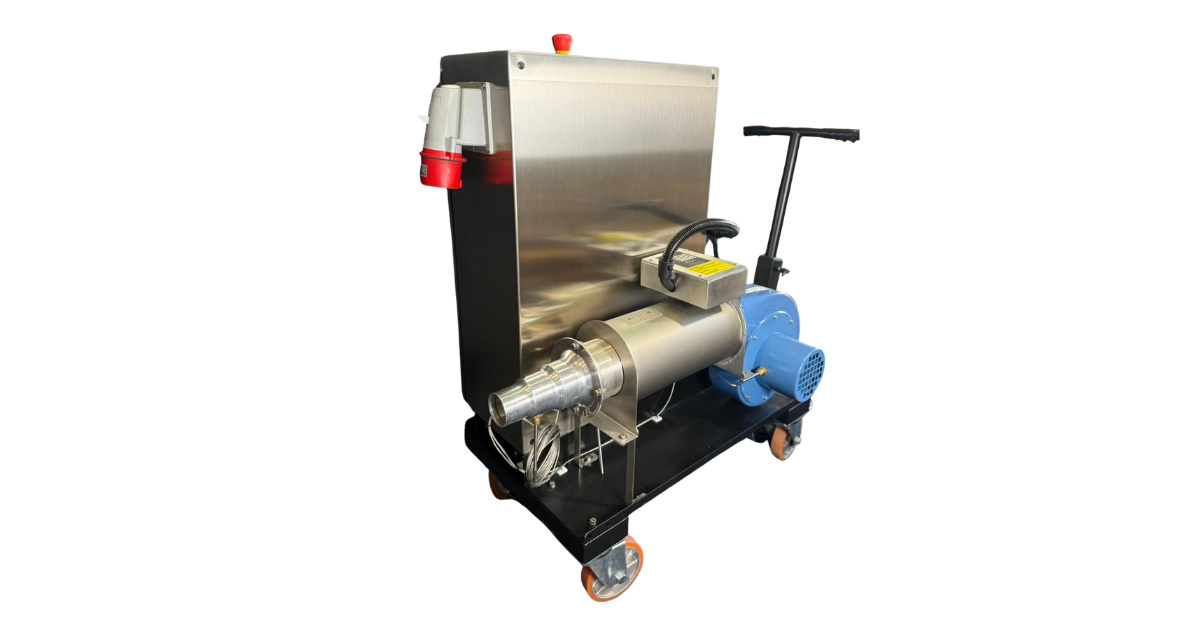
Industrial hot air equipment can be supplied as separate heaters and blowers or as a packaged system. Secomak’s HeatPack combines a fan and electric process heater on a common base, with temperature control and optional blower speed control to suit the process. An optional trolley allows the unit to be moved between suitable operating locations.


What are industrial Hot Air blowers used for?
Drying components and production equipment
Hot air can help evaporate moisture from surfaces. Air distribution and flow rate influence drying performance alongside temperature, so the way air reaches the wet surface is part of the system design.
Secomak has supplied HeatPack units for drying intermediate bulk containers after cleaning in pharmaceutical production. At GSK, the HeatPacks replaced hand-drying with hot air drying to prepare the containers for reuse ultimately increasing production.

Composite curing
Controlled hot air can provide the heating needed within a composite curing oven. The required operating conditions depend on the material and its specified cure cycle.
At Independent Composites, a HeatPack supplies recirculated warm air to support composite curing in project-specific oven arrangements. The customer valued being able to adjust airflow and heat output independently, allowing the setup to accommodate changing project requirements.
Read about HeatPack for composite curing at Independent Composites.

Preheating before manufacturing operations
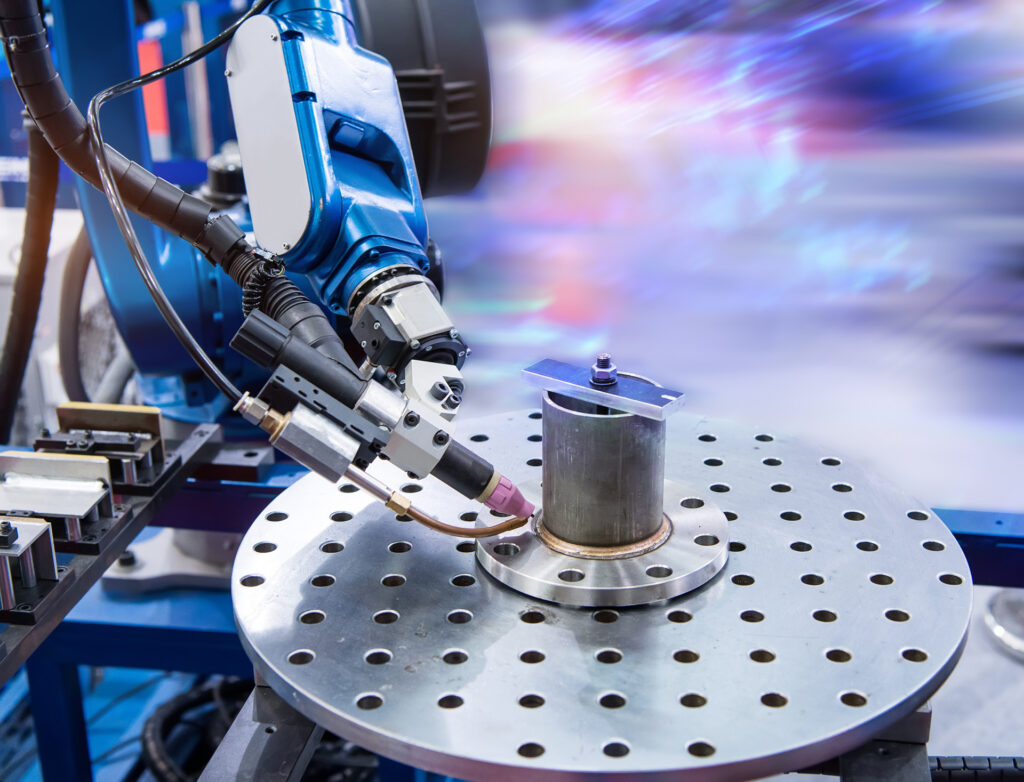
Hot air can also be used to raise a component’s temperature before a subsequent operation. Secomak supplied a bespoke 36 kW HeatPack for preheating a 450 kg copper component before precision welding in an aerospace application.
The project demonstrates why heater selection needs to account for the component being heated and the production schedule.
Read the 36 kW HeatPack aerospace preheating case study.
Why airflow and temperature must be considered together
A heater’s kilowatt rating describes its heating power. It does not, by itself, tell you the outlet temperature that will be achieved at a particular airflow.
For the same inlet conditions and heating power, increasing the mass of air passing through the heater each second reduces the temperature rise. Heating more air through the same temperature rise requires more power. This relationship is central to selecting a compatible heater and blower.
It also explains why maximum airflow and maximum outlet temperature should not be read as a single operating point. A unit advertised with both figures will need its performance data checked to establish the combination available for the application.
The inlet temperature is another part of the calculation. Heating fresh air from ambient temperature requires a different temperature rise from reheating warm return air. Start with the required airflow and the difference between inlet and outlet temperatures, then check the proposed equipment against those conditions.
Can hot air be recirculated?
Where the process allows it, warm air can be returned from the application to the heater inlet. Because the returning air is already warm, less additional heat is needed to bring it back to the required supply temperature.
Recirculation requires a heater, blower and return path suitable for the temperatures involved. Any air treatment and fresh-air requirements also need to be considered as part of the design.
Some applications cannot return process air to the heater. In Secomak’s Roxel installation, contamination prevented recirculation, so the HeatPack had to operate without reusing that air. Whether recirculation is appropriate therefore needs to be established before it is included in a proposed system.
What information is needed to specify a system?
Before selecting an industrial air blower, establish:
- What material or component is being heated and the purpose of the process.
- The starting temperature, target temperature and required heat-up time.
- The required airflow, where known, and the proposed air delivery arrangement.
- Whether air will pass through once or be recirculated.
- The available electrical supply and required controls.
For an oven or enclosure, include its dimensions, insulation and the load inside it. These details help assess the heat required by the application rather than selecting solely from the heater’s maximum temperature.
If you are considering hot air for a drying, curing or preheating application, contact Secomak with those details. We can review the requirement and advise on a suitable HeatPack configuration.