
World Food Safety Day is a reminder that safe food is not achieved by one process, one inspection, or one final check. It is the result of a controlled production system, where every stage of manufacturing, packaging, handling and distribution contributes to reducing risk.
In 2026, World Food Safety Day was marked on 7 June under the theme “From burden to solutions – safe food everywhere.” The World Health Organization highlights that foodborne diseases remain a major global burden, but are largely preventable when science, data and practical controls are applied effectively.
For food manufacturers, this message is highly relevant at the end of the line. A product may have passed through a validated cooking, washing, retorting, sterilisation, cooling or filling process, but the condition of the pack as it moves downstream still matters.
Whether the format is a flexible pouch, DOY pack, ready meal tray, vacuum-formed pack, bottle, can, tub, pot, sachet or carton, residual surface water can create avoidable issues after the wet process is complete.
This is where food pack drying becomes an important but often under-recognised part of the packaging line.
A wet pack can affect downstream hygiene, coding accuracy, label performance, secondary packaging quality and production efficiency. Effective drying is therefore not simply about appearance. It is a practical engineering control that supports cleaner handling, clearer identification and more consistent packaging performance.
The Post-Process Challenge: When Safe Product Meets Wet Packaging
Food packaging comes in many formats, each designed around the needs of the product, process and consumer. Flexible pouches offer lightweight convenience. Ready meal trays provide portion control and presentation. Vacuum-formed packs support shelf life and product protection. Bottles, cans and tins remain essential in high-speed beverage and food production. Pots, tubs and lidded containers are widely used across chilled, ambient and processed foods.
Each format brings commercial advantages, but each can also carry residual water into the next stage of production.
After washing, cooling, pasteurisation, retorting, sterilisation, rinsing or other wet processes, water can remain on the outside of the pack. On rigid containers, it may collect around rims, seams, bases, caps, necks or closures. On flexible packs, it may remain in folds, gussets, spouts and seals. On trays and vacuum-formed packs, it may sit in corners, edges, recesses, lidding-film areas or formed contours.
This matters because downstream packaging operations usually require dry, stable and repeatable surface conditions. Coding, labelling, sleeving, inspection, case packing, manual handling all perform more reliably when packs are presented clean and dry.
Secomak’s packaging and labelling guidance makes this point clearly: drying machines help ensure dry surfaces for effective label application, print clarity and packaging integrity across different packaging materials and formats, including glass, plastic, metal and cardboard.
Residual Water as a Downstream Hygiene Risk
In food production, water must be controlled carefully. It is essential in many upstream processes, but once product moves into dry packaging, coding and secondary packing areas, uncontrolled water transfer can become a problem.
Residual water can be carried downstream on the outside of packs and transferred onto conveyors, sensors, coding equipment, labellers, cartons, trays, work surfaces and floors. This can increase cleaning demand, affect line performance, create slip hazards and introduce unnecessary variability into areas intended to remain dry.
This does not mean that surface moisture on a sealed pack automatically makes the food unsafe. That would be an overstatement. Product safety depends on validated processing, seal integrity, hygienic handling and the wider food safety system.
However, from a preventive food safety perspective, unnecessary water movement should be controlled. HACCP is based on the systematic identification, evaluation and control of food safety hazards, including biological, chemical and physical hazards.
Food pack drying supports that preventive mindset. It helps reduce the uncontrolled movement of process water into downstream environments where dry conditions are required for consistent operation.

Why Different Pack Formats Create Different Drying Challenges
There is no single drying challenge in food packaging. The risk depends on pack geometry, material, line speed and the process immediately before drying.
Flexible pouches and DOY packs can retain water in gussets, folds, seals and spouted areas. Secomak’s Pouch Dryer system is designed for flexible pouches including stand-up pouches, gusseted pouches, spouted pouches, pillow packs, retort packs, lay-flat packs and ready meal trays.
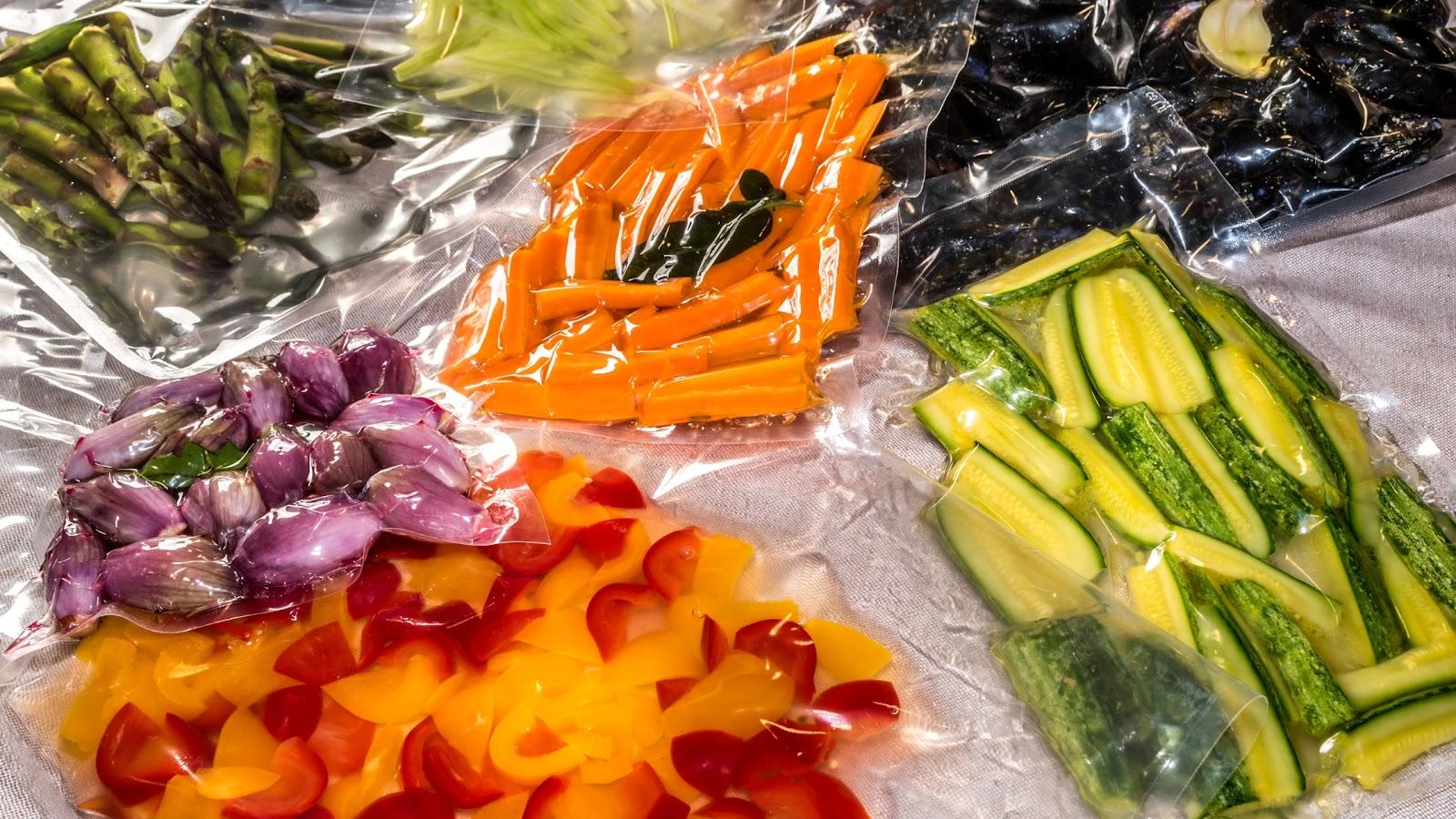


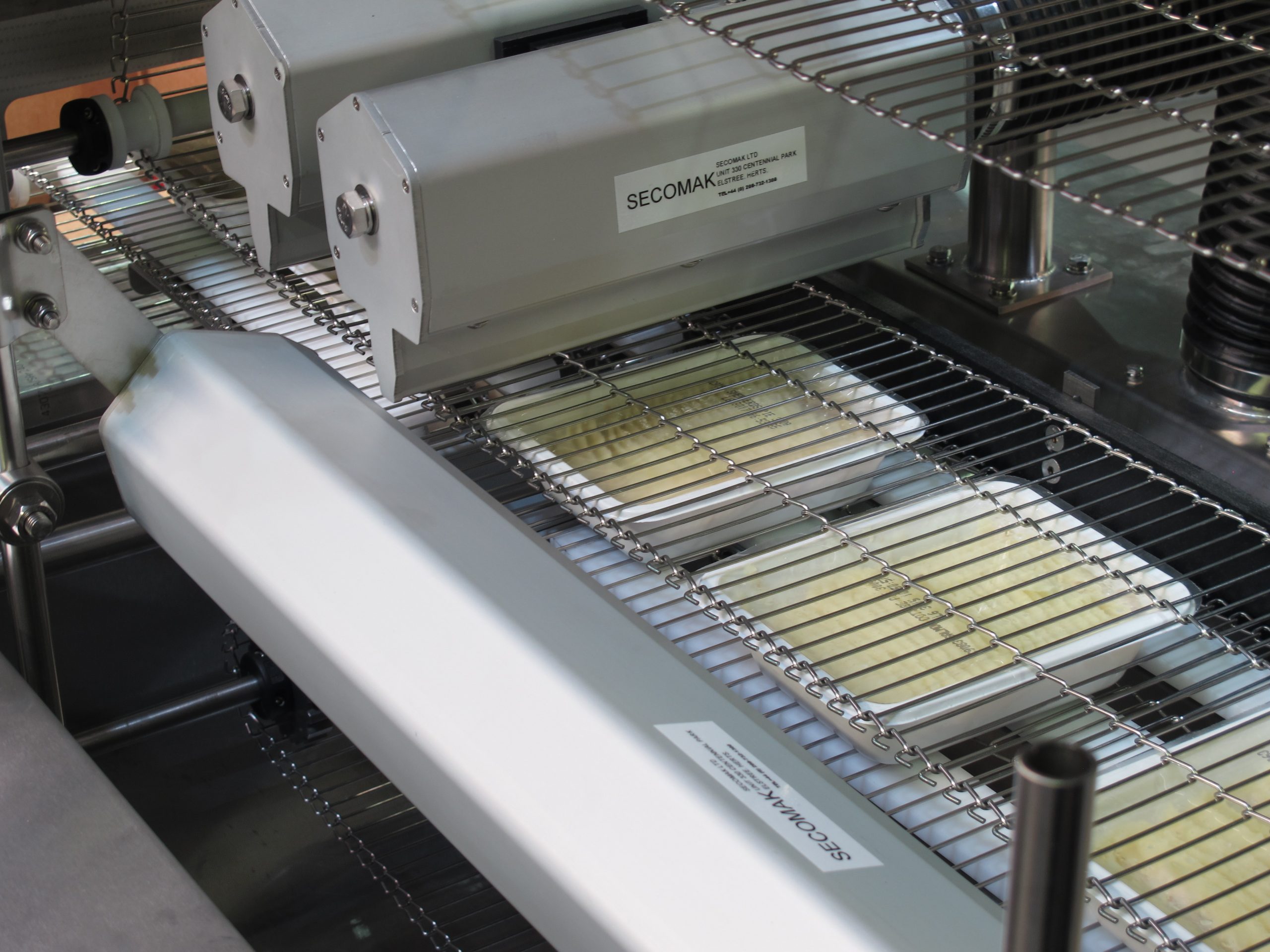
Ready meal trays and vacuum-formed packs can present a different challenge. Water may remain around tray rims, corners, contours, lidding areas and recessed surfaces. These are often the areas that need to remain dry for reliable sleeving, labelling, case packing or visual inspection.
The shared principle is the same across all formats: moisture must be removed from the external pack surface before it compromises the next stage of production.

Dry Packs Support Accurate Date Coding and Traceability
Date codes, batch codes and lot codes are not simply production details. They form part of the traceability system that allows manufacturers to manage quality, stock rotation, customer communication and recall readiness.
The FDA defines a traceability lot code as a descriptor, often alphanumeric, used to uniquely identify a traceability lot.
For food manufacturers, code quality depends partly on the condition of the pack surface. A wet pouch, tray, bottle, can, tub or vacuum-formed pack can interfere with inkjet performance, adhesion, clarity or legibility. Moisture may cause ink to blur, prevent strong adhesion or create inconsistent print quality.
This principle applies beyond pouches. Any food pack that requires reliable coding benefits from a dry and stable surface. A poorly printed code may not make a safe product unsafe, but it can weaken the traceability system that supports food safety governance.
In that sense, drying supports both operational quality and food safety assurance.
Protecting Labels, Sleeves and Secondary Packaging
The dry condition of the pack also affects the packaging system around the product.
Labels, shrink sleeves, cartons, cardboard trays and cases all rely on predictable surface conditions. If residual water is carried into these stages, it can affect label adhesion, print clarity, sleeve performance, carton strength and finished-pack presentation.
For food producers, this has practical consequences. Wet packs may slow automated packing, increase rejects, create water marks, weaken cardboard, or require manual intervention. In high-speed environments, even small moisture issues can multiply quickly across thousands of packs per hour.
A dry pack is easier to code, label, sleeve, inspect, pack and palletise. It also helps maintain a cleaner and more controlled end-of-line process.
Engineering the Solution: Drying Systems Matched to the Pack
Effective food pack drying is not simply a matter of blowing air at a product. The drying system must be matched to the pack format, the line layout, the product speed, the material and the specific areas where water remains.
Flexible pouches may require hold-down conveyors to keep lightweight packs stable. Gusseted packs may need targeted drying into folds and recesses. Ready meal trays and vacuum-formed packs may need drying across rims, corners and formed contours. Bottles and cans may need controlled air delivery around shoulders, necks, bases and seams.

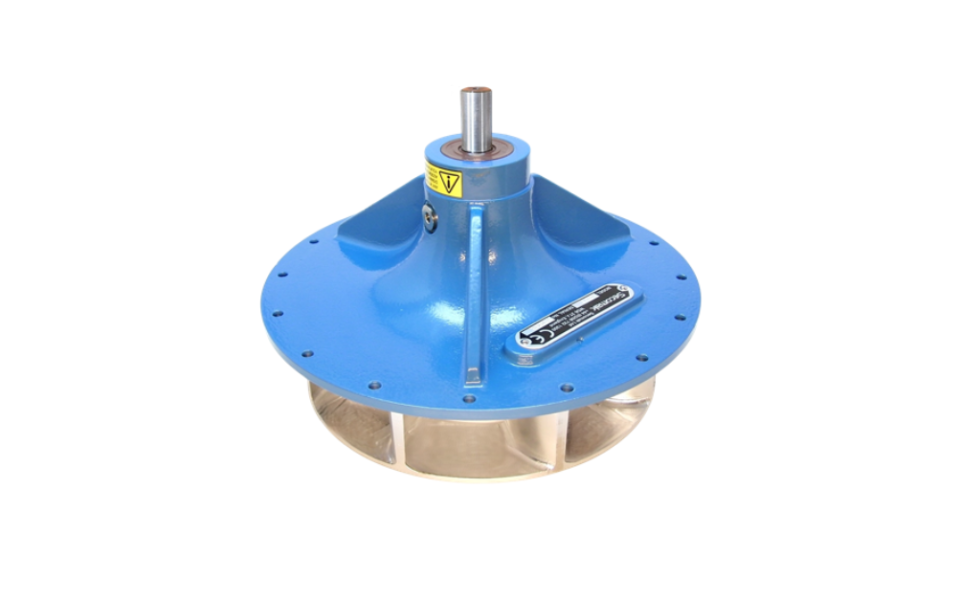
Secomak’s Pouch Dryer uses electrically driven centrifugal blower technology and does not require compressed air. It is designed for all-surface drying and includes a hold-down conveyor for lightweight products. It is also hygienically designed for food and pharmaceutical applications, with an integrated drip tray that collects removed water and drains it to a single point.

For wider packaging and labelling applications, our drying systems can be configured for different packaging materials and formats, including glass, plastic, metal and cardboard.
This flexibility matters. The most effective drying solution is not always a standard machine applied to every product. It is a system engineered around the actual packaging challenge, the production environment and the point at which moisture needs to be removed.
From Pouches to Trays: Drying Where Water Hides
The importance of targeted drying can be seen in our Full Green case study. The Pouch Dryer removed moisture from the entire surface of food pouches at up to 7,500 packs per hour, including the gusset of DOY packs where water can become trapped.
Although the example includes DOY packs, the wider lesson applies across food packaging. Water tends to remain in the least accessible areas: gussets, tray corners, pack rims, recessed contours, closures, seams and bases.
These areas are easy to underestimate because they may not always be visible at line speed. Yet they can still affect downstream handling, coding, labelling and secondary packaging.
The stronger approach is to treat drying as part of line design. It should be considered before coding, labelling, sleeving, case packing or palletising, not as an afterthought once moisture problems have already appeared.

Food Pack Drying as Part of a Preventive Food Safety Culture
World Food Safety Day encourages the industry to move from recognising food safety burdens to applying practical solutions. In manufacturing, this means identifying small, repeatable risks and controlling them before they become wider production issues.
Food pack drying is one of those practical solutions.
It does not replace validated cooking, retorting, pasteurisation, sterilisation, seal integrity checks, HACCP, cleaning programmes or traceability systems. Instead, it supports them by improving the condition of the external pack as it moves from wet processing into dry downstream operations.
Across pouches, trays, vacuum-formed packs, bottles, cans, tubs and other packaging formats, effective drying can help:
- reduce downstream moisture transfer
- support clearer date coding and batch identification
- improve label and sleeve application
- protect cartons, trays and cases
- reduce moisture on conveyors and handling surfaces
- support cleaner and more controlled dry-end operations
- improve production consistency and finished-pack quality
These benefits are practical, but they also reflect a wider food safety culture. Safe production depends on layers of control. Some are highly visible, such as thermal processing and microbiological validation. Others are mechanical, environmental and operational.
Pack drying belongs in that second category. It may not be the headline process, but when it is missing or under-specified, the effects can be felt across the line.
Conclusion: Turning Residual Moisture into Controlled Risk
Food safety depends on attention to detail. It depends on understanding how small sources of variability can become operational, hygienic or traceability concerns when repeated thousands of times per hour.
Residual water on food packaging is one of those details.
Whether the pack is a pouch, ready meal tray, vacuum-formed pack, bottle, can, tub or pot, moisture left after wet processing can travel downstream. It can affect coding, labelling, secondary packaging, handling and the dry conditions expected at the end of the line.
On World Food Safety Day, the message for manufacturers is clear: prevention is not only about major interventions. It is also about controlling the everyday process conditions that protect quality, hygiene and traceability.
By removing residual water from food packs before they move downstream, Secomak drying systems support cleaner handling, more reliable coding, stronger packaging performance and better-controlled production environments.
In food manufacturing, safety is built through systems. Food pack drying is one practical engineering step that helps those systems work as intended.